In Bay Hill's Original Homes, the Roof Sets the Terms of the Deal
October 15, 2026
October 15, 2026
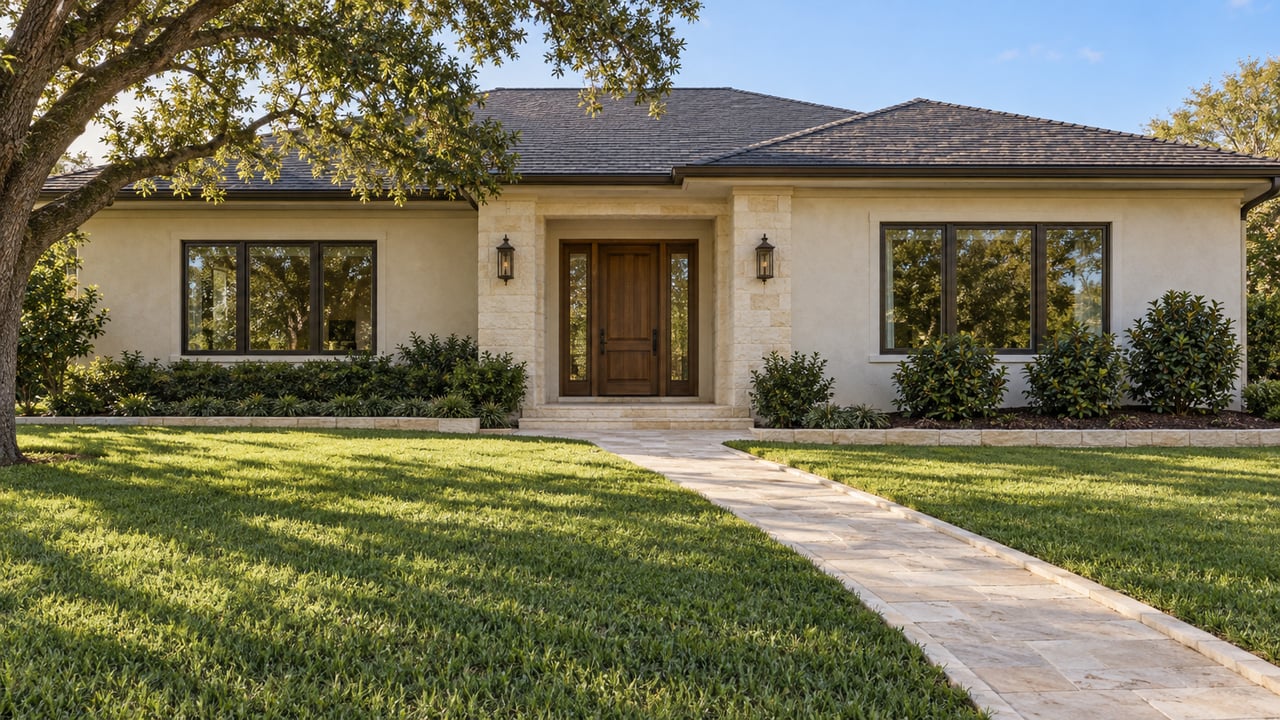
In Bay Hill's original homes, the roof shapes the sale before anyone discusses the finishes. Florida's insurance rules, the state building code and the Bay Hill Property Owners Association all deal with the roof first. Each of them asks something different: how old the roof is, what code it was built to, what paperwork records it, and who approves it before it can be replaced. A buyer's insurance quote depends on those answers. That quote shapes the offer, and the offer shapes the seller's net.
Much of Bay Hill still has its original 1960s, 1970s and 1980s houses, with full rebuilds on the lots between them. Those older houses are where these rules matter most.
Florida's roof-age protection is written into Section 627.7011 of the Florida Statutes. Under the 2026 version, an insurer may not refuse to write or renew a homeowners policy solely because of the roof's age if the roof is less than 15 years old.
For a roof 15 years or older, the homeowner can have an authorized inspection done. If that inspection shows at least five years of useful life left, the insurer cannot turn the policy down on roof age alone. The word "solely" matters here. Insurers can still apply their other underwriting criteria, so the protection is narrower than it first sounds.
A broader version almost arrived in 2026. Senate Bill 808 would have expanded the roof-age protections. According to the Senate bill analysis, it would also have created a new standard for low-slope roofs that could be restored with a roof coating system. The bill died in committee on March 13, 2026. As of October 2026, the existing 15-year rule and the five-year useful-life inspection are still the law. Any article that describes stronger protections is describing a bill that never passed.
For an original Bay Hill house, this means the roof's install date is the first fact an insurer checks. Once a roof passes 15, its condition has to be shown in an inspection report.
Older Florida homes usually change hands with two inspection reports. They are often confused, but they answer different questions, and each one affects the insurance quote in a different way.
| Four-point inspection | Wind mitigation inspection | |
|---|---|---|
| What it covers | Roof, plumbing, electrical system, HVAC | The home's wind-resistant construction features |
| Who typically asks for it | Insurers, when issuing or renewing coverage on older homes | The policyholder can choose to get one |
| What it can change | Whether a policy is written and on what terms | Windstorm premium credits |
| Form | Set by the insurer | OIR-B1-1802, updated effective April 1, 2026 |
The Florida Chief Financial Officer's four-point inspection guide explains that insurers commonly require this report when issuing or renewing a policy. It also notes that insurers may ask for roof documentation once a shingle roof is older than 15 years, or a tile or metal roof is older than 20. The Department of Financial Services' homeowners insurance overview describes the wind mitigation inspection, done on form OIR-B1-1802, as an inspection a policyholder may choose to get in order to seek windstorm premium credits.
Roof material changes the timeline. A shingle roof reaches the documentation threshold five years before a tile roof does. Two Bay Hill houses with roofs installed the same year can therefore look quite different to an underwriter.
The Florida Office of Insurance Regulation updated the Uniform Mitigation Verification Inspection Form, effective April 1, 2026. The revision followed a 2024 wind-loss mitigation study by Applied Research Associates. OIR also says a completed form stays valid for up to five years, unless the structure has material changes or the form turns out to contain inaccuracies.
That leaves a transition period. A seller who had a wind mitigation inspection in 2023 or 2024 may have a report on the earlier version of the form that is still inside its five-year window. A buyer's insurer will see that report, so it matters which version the file contains and whether anything has changed on the house since it was written.
When a roof is old but not failing, the cheaper route of repairing part of it can look attractive. Florida's 25% rule is often cited as the reason that works. Section 553.844 says that when 25% or more of a roof system or section is repaired, replaced or recovered, only the portion being worked on has to meet current code.
The limit is in the details. The exception applies only to a roof built, repaired or replaced to the 2007 Florida Building Code or a later edition, and it dates to a 2022 change in the law. A roof that has never been replaced to that standard doesn't qualify just because it's old.
So in Bay Hill, the year the roof was last replaced and the code it was built to divide the older houses into two groups. One has a 2007-or-later roof, where partial repairs follow the narrower rule. The other has an older roof, where the 25% exception doesn't help. A listing that says "updated roof" without a year leaves out the detail that matters most.
When the roof is replaced, Bay Hill adds a neighborhood step to the county permit. Here is the order of steps, using the Bay Hill POA's and Orange County's published processes:
Neither the POA nor the county publishes a fixed turnaround time. That matters most when a roof replacement is being planned around a listing date or negotiated as a closing condition. The ARC page doesn't print deposit amounts. It says they are shown when the application is filled out. The association's covenants and rules are linked from its documents page.
Florida also changed roofing-contractor rules in 2025. House Bill 715, which became Chapter 2025-40, revised what roofing contractors are allowed to do and changed the cancellation and disclosure rules for roof contracts in certain declared-emergency situations.
Florida's My Safe Florida Home program is often mentioned for older houses, so its rules are worth knowing in detail. As of its September 2026 homepage, the program was advertising free wind mitigation inspections and grants of up to $10,000.
The inspection and the grant have different requirements. According to the 2025–26 program page, inspections are open to site-built, owner-occupied single-family homes or townhouses with a homestead exemption. Grants require all of the following:
Under Section 215.5586, the state contributes $2 for every $1 the homeowner puts in, up to $10,000. Qualifying low-income applicants may receive up to $10,000 without a match. The statute also limits applications to the funds available. An original Bay Hill house meets the pre-2008 test easily. The insured-value cap and the income test are separate requirements, and each household has to check them against its own numbers. Funding also depends on legislative appropriations, so availability can change from one cycle to the next.
New construction at the top of Bay Hill's market shows the other side of the same issue. Builders there advertise what the roof and walls are made of.
In July 2026, Central Florida Lifestyle reported that a custom home at 7958 S. Park Place, in Bay Hill's South Bay community, was listed for $3.6 million. It had won first place in the $3.2 million to $3.6 million single-family category at the 2026 Orlando Parade of Homes. The coverage put its insulated concrete form construction first, describing the method as rare in Central Florida and stressing storm resistance. It then listed a fully paid-off solar energy system and a 26-kilowatt Generac whole-home generator, before getting to the Wolf and Sub-Zero kitchen.
In Bay Hill's Carmel enclave, Hardwick General Contracting has shown a 12,568-square-foot custom estate under construction. Nasrallah Architecture Group and Soco Interiors are its design partners.
These houses sit near original homes built decades earlier. For a new build, construction and roof quality are part of the sales pitch. For an original house, the same subject comes up as an inspection report, a form version and a code year. Sellers of older homes who have that paperwork in order go into negotiations ready for questions buyers' insurers will ask anyway.
Does a roof over 15 years old make a Bay Hill home uninsurable? No, not on its own. Under Section 627.7011, the homeowner can get an authorized inspection. A roof shown to have at least five years of useful life cannot be refused solely because of its age, though insurers can still apply other underwriting criteria.
Is a seller's wind mitigation report from before April 2026 still usable? OIR says a completed form is valid for up to five years, unless the structure has material changes or the form contains inaccuracies. The updated OIR-B1-1802 took effect April 1, 2026.
Does the Bay Hill POA approve roof replacements? Roofing is on the POA's list of exterior work that goes through ARC Tracker and generally needs a construction deposit before approval. The ARC page says deposit amounts are shown during the application.
Does Orange County require a permit for a re-roof? Yes. Re-roofing is a permit type filed through Fast Track, and a Notice of Commencement is required for work valued over $5,000.
If you own one of Bay Hill's original homes and are deciding whether to replace the roof, document it, or price the sale with it as is, Toni Cafferty can lay out the timing and paperwork before a buyer's insurer brings it up. You can begin with a confidential home valuation and a conversation about how your roof's age and records fit into the plan. Request a Confidential Consultation.
This article is general information, not legal, tax or financial advice. Consult a qualified professional about your situation.

Primary phone
(904) 449-2184Address
851 W Morse AvenueAbout the Author
A true native, Toni Marie Cafferty calls Florida home. Originally from Jacksonville, she moved to Central Florida while attending the private university of Stetson where she graduated with a degree in Marketing and International Business. With time spent in Austria, Germany, Italy, Switzerland, and the Netherlands, she loves to explore other cultures. In her real estate career, she’s had the pleasure to work with buyers from around the world.
As a Realtors® daughter, Toni Marie was raised in the real estate industry and contributes her high level of client care to that of her mother. Toni Marie caters to the luxury market with a white glove-style all her own. Just as the Golden Rule states, “Do unto others as you would have them do unto you,” Toni Marie takes this to the next level offering superb client care. When asked, she says “it’s all about the details and being present with those you are working with whether it be in-person or over the phone. Be ahead of your client’s questions and help provide clarity and honest feedback.”
Toni Marie Cafferty’s Gold Standard (#tmcgoldstandard) has garnered respect from her colleagues and clients alike as she grows her real estate profession. In the past 9 years, she has managed over $106 million in sales and she’s not slowing down; rather she is expanding her reach with Compass to help more buyers find their place and continue to shatter records for her sellers. Most recently, Toni Marie has been the highest priced estate under contract in Windermere, Florida since 2019 and set a new price per square foot high in the exclusive community of Isleworth Golf & Country Club.
Toni Marie rounds out her career with a balance of time spent with her friends and family. Her husband, Brett, and their two dogs are looking forward to growing their family over the next few years as they continue to call Central Florida their home.
Stay up to date on the latest real estate trends.
November 6, 2026
Conclusions Drawn From the Lakes, Location, and Market Data.

November 6, 2026
Springs, Trails, Beaches, and Historic Towns Near Windermere.
November 5, 2026
October 29, 2026
October 22, 2026
October 22, 2026
October 15, 2026
October 8, 2026
Toni Marie Cafferty | October 7, 2026
Inspiring Outdoor Kitchen Ideas for Windermere Homes and Effortless Entertaining.